
- JOIN US


- Education
- Education projects
- Community development
- Community development projects
- JOIN US
- Partner with us
- Become a corporate partner
- More ways to get involved
- Fundraise
- Do your own thing
- Walk Her Way
- JOIN US
- Why education?
Our Stories
From the Back of the Classroom to the Front: How Education Changed Alex’s Path
Published 17th Sep, 2026
Alex’s story is one of quiet resilience — and of what is possible when a young person is given the chance to complete their education.
Since 2013, So They Can has been supporting Alex through a teacher trainee scholarship, as part of our School Improvement Project in Baringo, Kenya.
One of the challenges facing schools in Baringo is that, because it is such a remote, harsh and under-resourced region, teachers posted here from outside the area often don't want to stay — and put in for transfers, which shows in their attitude and commitment to the role.
Our teacher trainee scholarships respond directly to this. They support qualifying secondary school leavers from Baringo through a three-year Diploma in Teacher Education, with the aim of nurturing the next generation of teachers for our 10 primary schools, which together reach over 4,200 students (49% girls). Because these scholars are trained from within the community, they are more likely, once qualified, to remain and teach in their local schools.
In Alex’s case, this scholarship support has carried him through a Diploma in Teacher Education at Tambach Teachers Training College, a public college in Elgeyo-Marakwet County, Kenya, where he has recently graduated.
But his story begins far from the college gates, in Silale Ward — a remote area of Tiaty Constituency in Baringo, Kenya.
Life in Silale is not easy. The area is home to the Pokot, a pastoralist community whose livelihoods depend on livestock that must survive increasingly long dry seasons, and water is scarce.
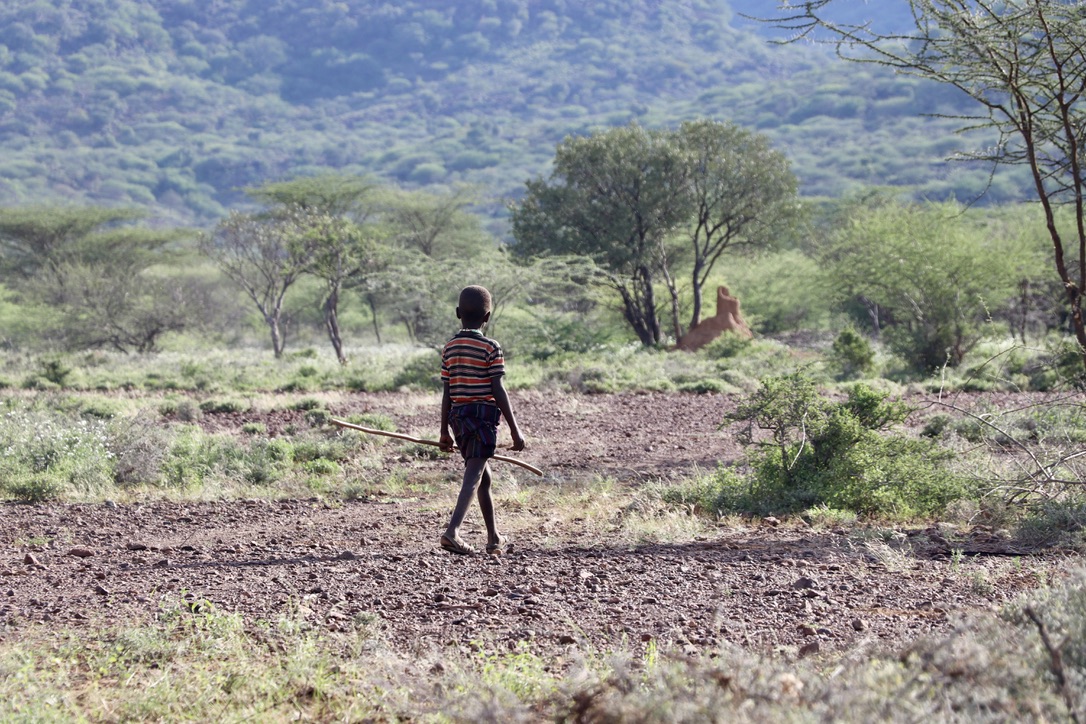
Tiaty is also one of the parts of Kenya most affected by banditry — organised cattle raiding and armed conflict between rival groups, usually fought over grazing land, water and livestock, and made more dangerous by illegal firearms. Parts of the region have been formally classified by the Kenyan government as “disturbed” for security purposes, and the ongoing insecurity has, for years, disrupted schooling and displaced families. In this environment, many boys leave school altogether — drawn into herding, cattle raiding, or the search for casual work.
Alex was also raised by a single parent. He did not let either circumstance define his future.
Discussion of the barriers facing children in Pokot communities often centres on girls, and rightly so — those barriers are real and devastating for the girls who face them, such as gender-based violence, Female Genital Cutting and child marriage. But Alex is a reminder that boys also face significant obstacles to getting an education. As he puts it:
“Boys in Pokot also walk through fire to get an education.” His own life is proof of that.
At Tambach Teachers Training College, Alex did not simply attend classes, he sought out leadership. He stood for and won election as “Governor” of the college’s Student Council: a peer-elected student leadership role modelled on the title used in Kenya’s system of county government. For a young man from one of the country’s most marginalised regions to contest — and win — a leadership position at a national college is no small achievement. It is a demonstration of what access to education can do: it gives young people not only qualifications, but a voice.
Alex has now completed his Diploma in Teacher Education and is preparing to graduate.
His story carries three lessons that sit at the heart of So They Can’s work:
- Background is not destiny. A child from a disadvantaged background can sit in the same classroom, and compete on the same terms, as a child from a far wealthier family — if given an equal chance.
- Education is the great equaliser. It is one of the few forces that can genuinely bridge the gap between a privileged child and the child of a pastoralist family.
- A child raised by a single parent in his community can still dream big. Financial hardship did not stop Alex. Distance did not stop him. Struggle did not stop him.
Alex is now preparing to return to his community — not only as a qualified teacher, but as a role model. He will stand in front of a classroom and tell the next boy from Silale:
“If I did it, you can do it too.”
Alex’s journey is a powerful example of why So They Can invests in scholars like him: educate one child, and you strengthen an entire generation.
Support So They Can’s Education Program today — sponsor a student through education or donate now.
Written by Moureen — So They Can Msomi Scholarship Alumni and Ambassadors of Hope Champion
Join our mailing list
Together we can be the difference. Subscribe to our newsletter today.


So They Can is accredited by the Australian department of Foreign Affairs and Trade (DFAT), responsible for managing the Australian government’s development program. So They Can receives support through the Australian NGO Cooperation Program (ANCP).


So They Can is a registered charity in Australia (ABN 91 138 063 475), New Zealand (CC # 45673), a registered 501(c)(3) not-for-profit in the USA (EIN 47-1079440), and a UK charity with the Registered Charity Number 1213084.