
- JOIN US


- Education
- Education projects
- Community development
- Community development projects
- JOIN US
- Partner with us
- Become a corporate partner
- More ways to get involved
- Fundraise
- Do your own thing
- Walk Her Way
- JOIN US
- Why education?
Our Stories
Behind the numbers: How we collect data to reflect, adapt and scale our work.
Published 14th Apr, 2026
At So They Can, Monitoring, Evaluation and Learning (MEL) underpins everything we do. MEL is critical to understand how effective and efficient our interventions are. It is also an opportunity to inform learning, foster continuous program improvement, and provide evidence for scaling up our programs.
How do we measure our impact at So They Can?
Our MEL is based on our Theory of Change, and we have a Monitoring, Evaluation and Learning Manager and Officer in both Kenya and Tanzania
- Baseline data is collected at the beginning of each new project by our in-country MEL and Program team members. Both quantitative and qualitative data is collected depending on the nature of the project and indicators required. For example, in our “Keeping Girls in School” project, we monitor the distribution of our reusable sanitary product packs, participation in menstrual health training, and changes in girls’ knowledge about their rights. This allows us to track not only what we deliver, but the difference it makes—evidenced through improved knowledge and practices, as well as contributing to improved girls’ education outcomes.
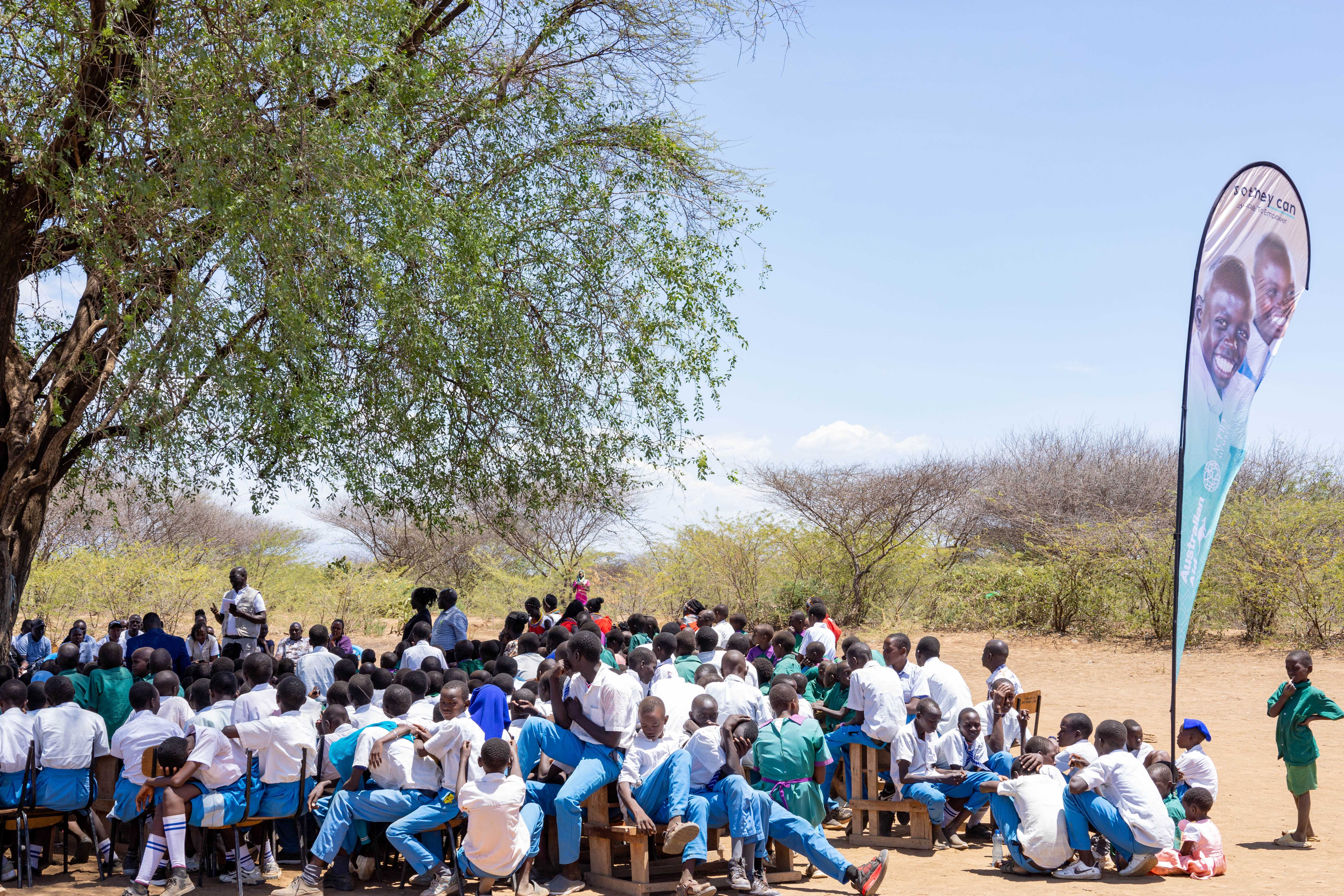
- Data is collated throughout project implementation at quarterly intervals. Our team conducts monitoring visits with partner schools to ensure data quality and report project progress and completion. Conversely, quarterly reports are shared with our team by the Head Teachers of the current 48 schools that So They Can supports.
- Our team produces quarterly output reports and Annual Project Evaluation reports through our MEL digital software, Toladata, to track all projects against targets and achievements, reflect on challenges and provide future recommendations. We use a range of innovative MEL techniques, such as outcome harvesting, to validate important changes including stakeholder behavior, relationships, and practices that go beyond normal indicator tracking.
- We will also collect data on our “sustained” partner schools to ensure that these schools and communities continue to deliver quality education even after our exit. These reports will inform our future project plans.
- Finally, in line with the phases of our Program Implementation, So They Can periodically engages external consultants to conduct Program Evaluation every three years. The purpose of these external evaluations is to assess the relevance, efficiency, effectiveness, impact and sustainability of So They Can’s Program, and to provide valuable insight that is reflected in planning for the following three-year period.
Accountability, impact and So They Can’s full accreditation with the Australian Government
Our full accreditation with the Australian Government through the Australian NGO Cooperation Program (ANCP) further strengthens our MEL practice and reinforces our commitment to transparency, effectiveness, and delivering measurable impact for the communities that we partner with. Our accreditation means that we operate within a rigorous framework of external oversight and accountability. It requires us to meet high standards across governance, financial management, risk, safeguarding, child protection, and program effectiveness, and we are subject to regular independent review and continuous monitoring.
In August 2025, an Accreditation Officer from Australia, together with an Officer from the Australian High Commission in Nairobi, conducted an in-person monitoring of So They Can’s projects in Kenya. The report commended our commitment to DFAT’s development pillars including disability inclusion, gender equality, collaboration and local partnerships. The monitoring report concluded that:
‘So They Can’s Education Program demonstrates value for money… [Their] adaptability ensures that funds are not only used efficiently but are also strategically targeted to maximise developmental impact’.
Participant-first MEL
Throughout all stages of our MEL, we believe that it is vital to engage a diverse range of stakeholders, including children, to ensure their voices are heard, promote buy-in and motivate action. We aim to ensure that the processes and systems we employ for assessing our impact are culturally sensitive and accessible.
“Reliable data enables us to clearly tell meaningful stories of change and development.”
Roy, MEL Manager, So They Can Kenya.
”Data collected and reported through So They Can’s M&E systems provides the evidence of program progress and the foundation of accountability.“
Wilson, MEL Manager, So They Can Tanzania.
You can meet our MEL team members here.
Join our mailing list
Together we can be the difference. Subscribe to our newsletter today.


So They Can is accredited by the Australian department of Foreign Affairs and Trade (DFAT), responsible for managing the Australian government’s development program. So They Can receives support through the Australian NGO Cooperation Program (ANCP).


So They Can is a registered charity in Australia (ABN 91 138 063 475), New Zealand (CC # 45673), a registered 501(c)(3) not-for-profit in the USA (EIN 47-1079440), and a UK charity with the Registered Charity Number 1213084.